

A quick note about the chessboards: Unfortunately, Substack is currently having trouble processing Lichess study embeds, which means I can’t include the interactive boards directly in my articles as I normally would. I didn’t want this to delay the article, so for now I’ve included diagrams and links to the corresponding Lichess studies instead.
As soon as the embeds are working again, I’ll update the article so you can explore the positions directly here. Thanks for your understanding!
“Who is the strongest player you have ever beaten?” - I hear the question so often.
Well, two players come to mind. One was an actual win, but today I’d like to tell you about the other one: a game that ended in a draw. I’ll share the win another day.
But now that November is right around the corner and I’ll reach the ripe old age of 30, I’d like to revisit a little story from my childhood: the day I drew against Judit Polgar. It might not have been a win, but I hope it still qualifies as one of my “best wins.” :)
One thing I've always really liked about chess is that you can play against anyone: adults or children, hobby players or professionals, women or men.
Having an older brother and open-minded parents meant I also grew up with things that little girls weren’t always encouraged or expected to enjoy. Playful wrestling, boyish games and toys were all part of my childhood, and I felt a little special for that. Chess fit naturally into this picture, too. It wasn’t the sort of activity girls were usually encouraged to pursue, and I was sometimes steered towards other interests instead by other adults. Perhaps that’s also why the idea of showing the world that I could be just as smart as, or even smarter than a boy appealed to me so much.
And even in the game, I’ve mostly been an attacking player, as a close friend once put it, “Fruzsi would throw even the garbage bin at her opponents”. I didn't care if the board was on fire or who my opponent was. I wanted to win.
I had been told multiple times that I was unlike other female players because I didn’t play girly chess (this sounds so messed up now), and that my playing style was similar to Judit’s. Some even went so far as to say that I’d be the next Judit Polgar. At the time, all this felt flattering.
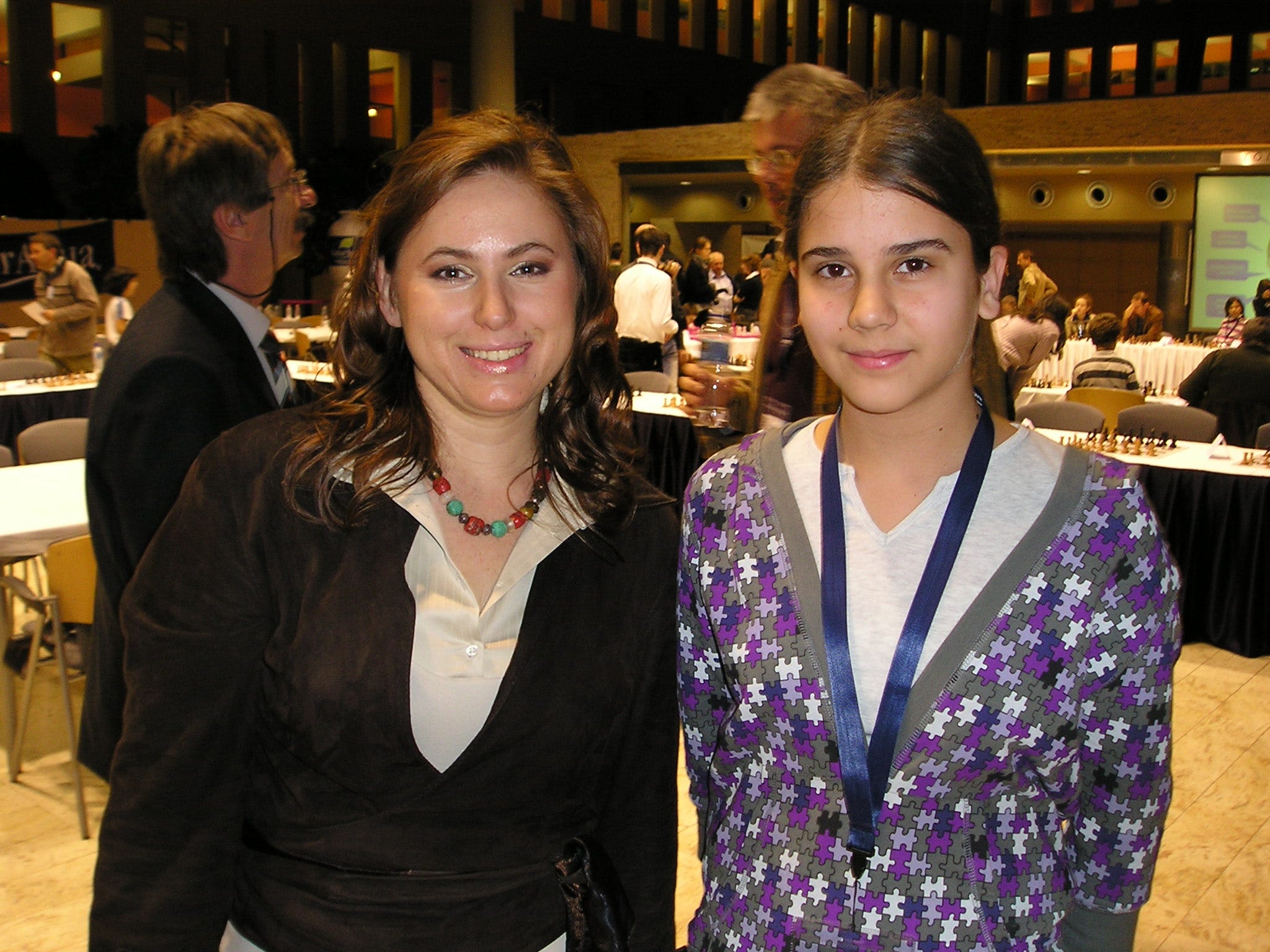
So it probably comes as no surprise that the Polgar sisters, especially Judit, were my childhood idols. It was empowering to know that there were other (Hungarian!) women who, despite the challenges, had proved themselves in the male-dominated chess world. It also made the sexist comments easier to dismiss when someone couldn’t keep one to themselves.
The Polgar sisters have always inspired me, made me want to become better, and I’ve always considered it an honour to play against any of them. However, it wasn't until years later, at the Polgar Chess Festival, that I finally got the opportunity to do so.
If I remember correctly, the participants had to sign up a few hours before the simul, and one of the organizers would pull their names from a bag to make the selection random. There were so many people hoping to play that getting picked was difficult, and accordingly, I wasn't selected.
I knew the chances were low, but I was still quite disappointed. So I went on my way with my mom, searching for another program that was available at the Chess Festival. By some miracle, however, one of the organizers whom I knew let me know that a participant had to withdraw, and asked me if I’d like to play. My eyes immediately lit up, and needless to say, I accepted the offer.
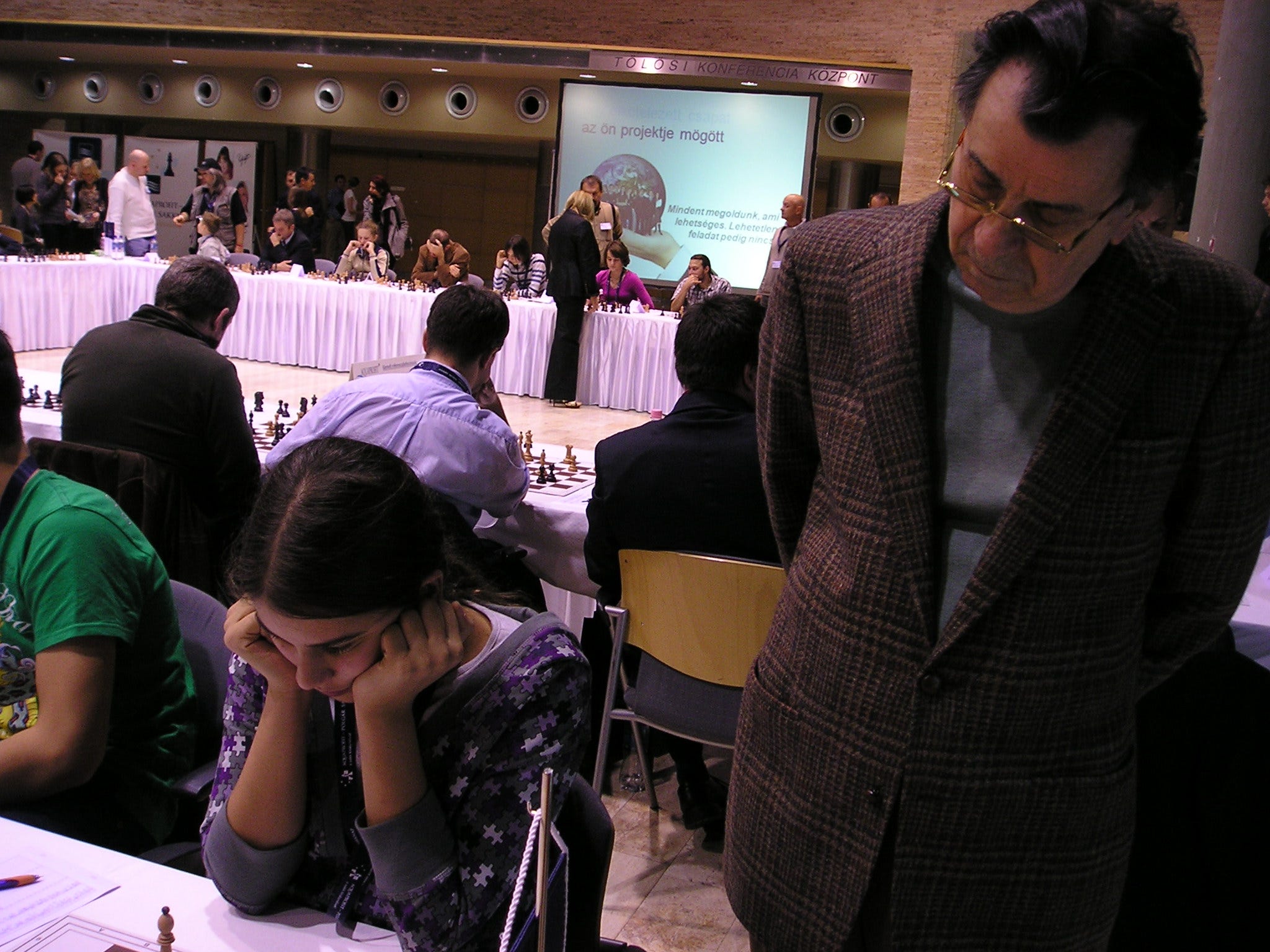
Everything happened so fast after I sat down at the table that I hadn't even fully processed what was happening. After a short speech by someone important, she began her walk, greeting everyone with a smile and making her first move.
At the time, with a FIDE rating of around 1900, I didn't think I'd be a match for her, so I didn't have much faith in the result. My main goal was to last longer than most of the other 30 players and put up a good fight so I could say I'd done my best. However, as the game progressed, I slowly began losing touch with my surroundings, until nothing else existed except Judit, the chessboard, and me.
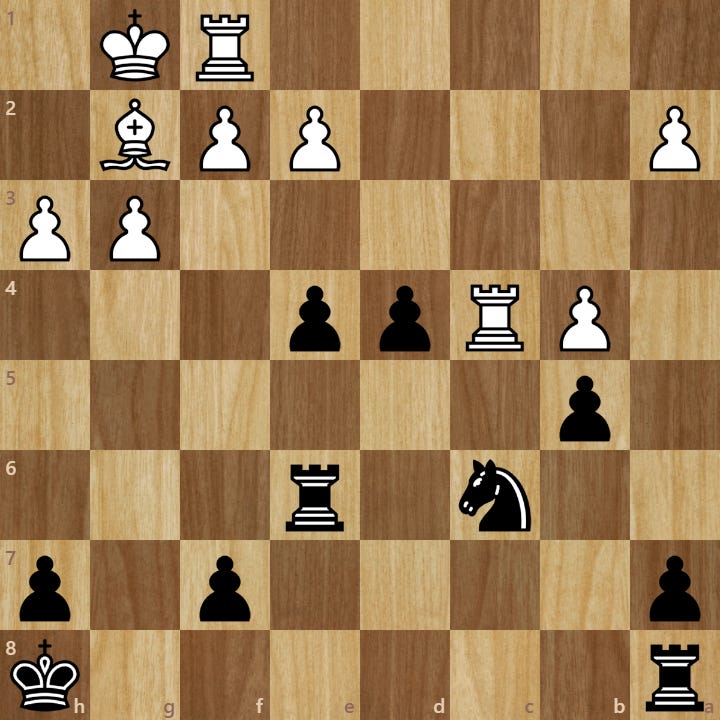
Play through the variations here
Up until this point, I don’t think I made too many conscious decisions, I was relying more on intuition. Of course, I did calculate and follow some principles, but I mostly played what seemed right. I only realized during a later analysis that my h5 Bishop was in more danger than I’d perceived. After a few hiccups in the opening, though, I suddenly started feeling comfortable. Way too comfortable.
Do you know that feeling when you notice you’ve blundered, your adrenaline floods your bloodstream, and it feels as though someone has cranked up the heater? Someone should tell my body that it shouldn't react to blunders as though a T-rex has just entered the building. But since no one was kind enough to do so, that’s what went through my body and mind after playing 23. …b5??.
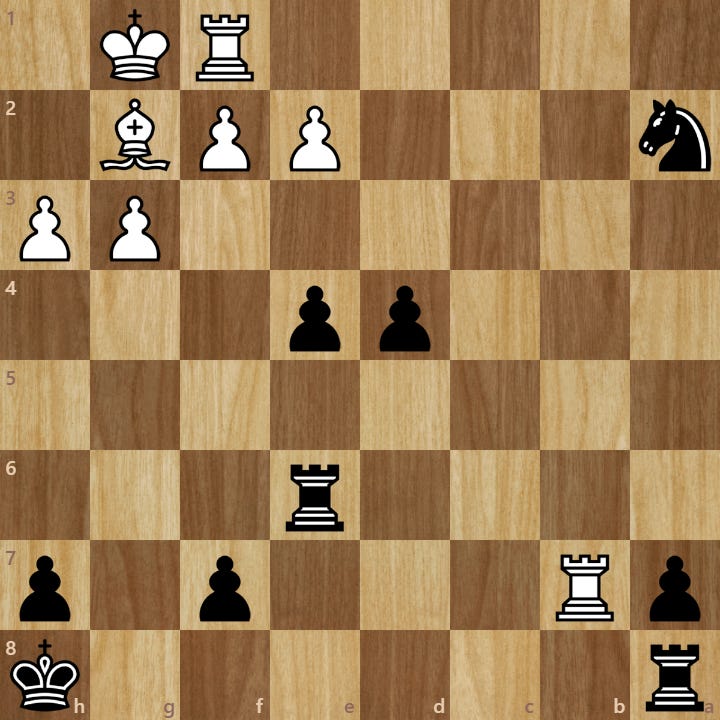
Play through the variations here
The number of active boards steadily dwindled as player after player resigned. Some stayed at the table slightly longer, lost in thought or laughing at their mistakes. Others discussed the game with bystanders, adding to the general noise.
With fewer games to attend to, Judit returned to my board more quickly, leaving me less time to think between her visits. But! She also started spending considerably more time there at this stage, which definitely made me a little smug.
Look at me in this position, not so bad after all, right? I began to realize that I was no longer fighting to survive. I was even up a pawn, an outside passer nonetheless, so Judit should be the one who's more worried!
I just wish little Fruzsi had focused more on that golden pawn than on fearing for her f7 one…
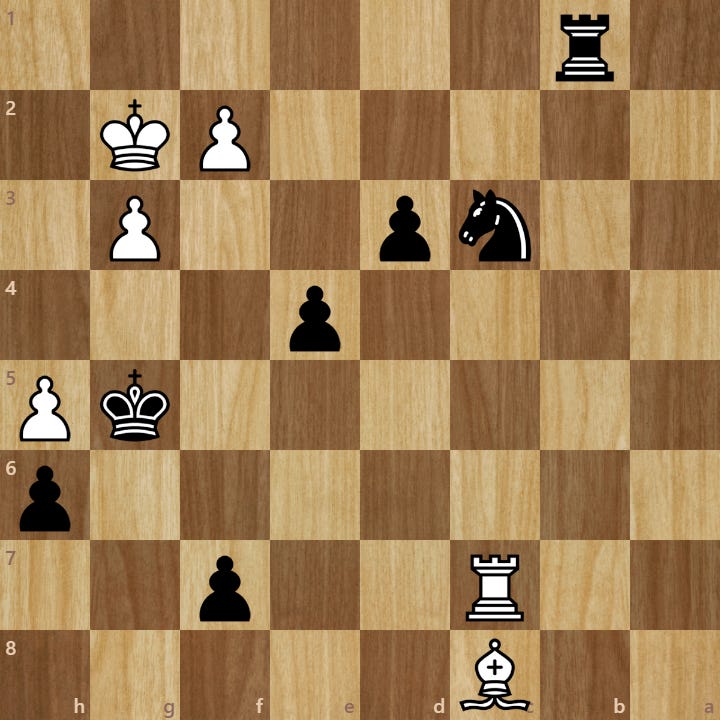
Play through the variations here
By this point in the simul, I could count on two hands the number of players still in the game. The pressure to make decisions quickly was mounting, as she got back to our position in a shorter time.
A few spectators, along with GM Pal Benko, gathered around my board to investigate the position. I don't remember noticing him during the game; my mom was the one who excitedly told me about it afterward. I felt proud, of course, but also somewhat embarrassed about my chess. It's not every day that such a great player watches you play. :)
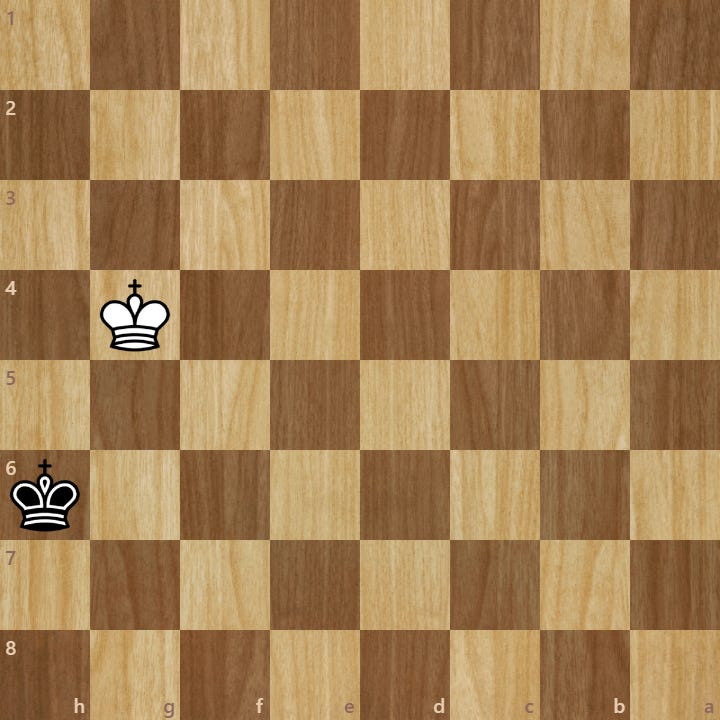
Play through the variations here
After shaking hands with Judit, the next thing I saw was my mom flying towards me with a huge smile on her face. After landing, she shook my shoulders, saying, “You drew her, you drew her!” The other adult with us, an IM friend, told me jokingly that he couldn't believe “we'd really fought until only two Kings”.
I didn't get a chance to speak with Judit beyond asking for a photo, which is a bit sad, but also expected. All the sisters were surrounded by organizers and special guests.
Looking back, even if I could speak with her, I wouldn't have been able to say anything coherent. I was still processing the result, and I was also very shy at that age. So most likely I’d have just smiled and nodded politely, and let my IM friend do the talking.
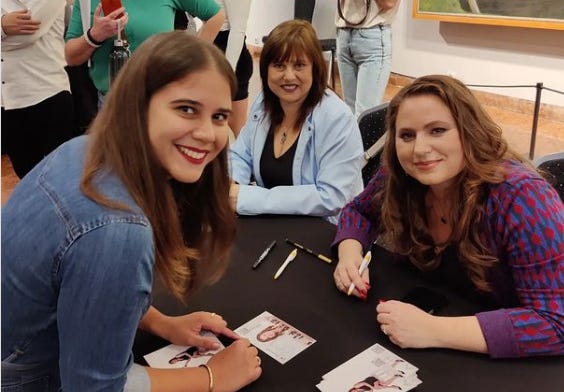
In comparison, last year at the Global Chess Festival, when I represented and “provided my hand” for the Chessable Improvers Community (they told me their moves in an online call, and I played them on the board), I even found the courage to initiate some playful banter with her which she gladly engaged in.
I’ve definitely played better games in my life: games where I was more accurate, understood more about chess, and didn’t benefit from the fact that my stronger opponent was busy playing a simul. But this still remains one of my favourite achievements, simply because of what it meant to me as a child to meet and play against my role model. To even draw with her.
With hindsight, I realize what an invaluable experience it was. It gave me confidence and showed me what I was capable of, even when the sun didn’t shine and I struggled to believe in myself.