

“Until you are at least a high Class A player: Your first name is ‘Tactics’, your middle name is ‘Tactics’, and your last name is ‘Tactics’” - Ken Smith
Some time ago, I read an article claiming that the internet is full of advice like “just solve puzzles and you will become better” and how that is not true. The author had spent a long time doing tactics without seeing much improvement and concluded that chess requires far more than tactics practice.
I understand why they reached that conclusion. I've seen many players struggle with the exact same thing. To some extent it’s true, but in reality, the correct tactical training can give a huge boost.
Why harder isn't always better
Just to simplify things, I will divide puzzles into ‘easy’ and ‘hard’. Easy tactics are the ones that you can spot quite easily, less than a minute or two. Hard puzzles are where you usually have to spend long minutes to find the solution. These are the ones that you likely find when you click on the average “(Solve) Puzzles” on any chess website or application.
I noticed more difficult puzzles are praised by most players. These are the ones that “challenge you”, that will “help you raise your rating”. After a certain level, yes. These are excellent if you want to improve your calculation and your visualization, which are important skills, but if you don’t see threats and hanging pieces in one move, then it is useless to calculate even 3 moves ahead. So, until you see the board without bigger issues and you are familiar with most patterns, they shouldn't make up most of your training.
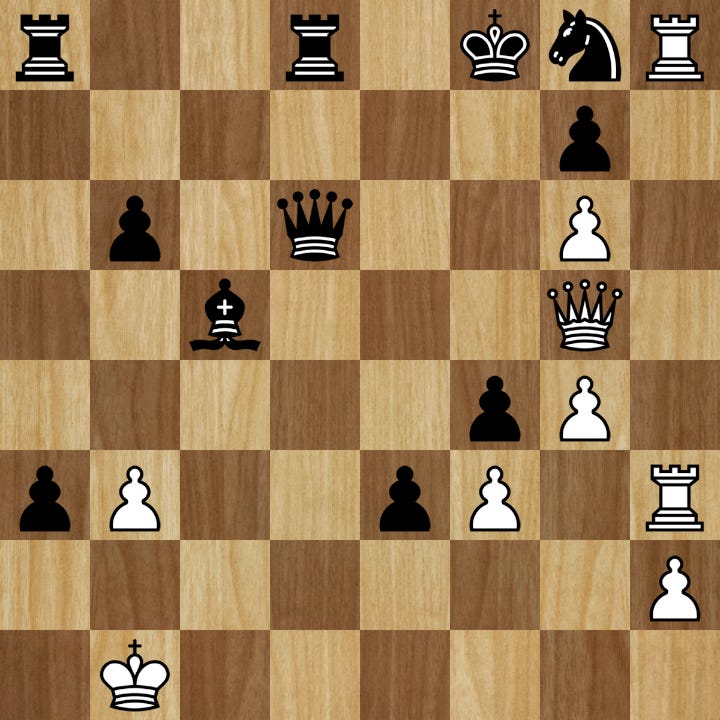
But how can easy puzzles be useful?
Regardless of rating, they can be valuable for anyone. How?
First of all, up until 1200-1400 chess.com/1500-1700 Lichess rapid rating, people mostly lose by blundering pieces in one or two moves, or miss it when their opponent does it. Strategy matters far more on higher levels, when your rivals no longer blunder that much anymore.
“But Fruzsi, how do I make a plan? That’s important too, not just tactics”. Yes and no. You can find the perfect plan, but if you blunder your Queen in 2 moves, then it was all for nothing. On the other hand, even if you are unsure of what your plan should be, but you play an okay and safe move, and you watch out for your opponent’s blunders, you will be much more successful on the long run.
This is where easy puzzles come into the picture. They will help you learn the main motifs in chess, will strengthen your board vision, leading to fewer blunders. Also, during a match you shouldn’t spend all your time and energy unnecessarily on finding a simple fork or a pin, when you should focus on things like plan making, strategy, and so on. Practice the patterns beforehand, so you can notice them far faster in your games.
To improve your pattern recognition, do hundreds (or thousands, if you have the time :)) of easy tactics for each tactical motif (like; mate in 1-2, skewers, annihilation, discovered attacks, etc.). It might sound like a lot, but since they are simple they won’t take that long, and you can do them whenever you have a couple of minutes free or when you’re too tired to do something more demanding. I have ~2400 blitz rating, but even I jumped up 100-200 points in the past few years partially thanks to going through easy tactics with my students.
Another time when they could come in handy (even for high-level players) is when you are about to play a chess game. Your brain is probably not in ‘chess mode’ yet when you sit down to play after a long day. By solving them you won’t only get some confidence boost but you will also warm your mind up for the battle!
Also, if the majority of the games you play are blitz and bullet, then doing these will especially help you. In these time controls, you simply won't have time to calculate very much.
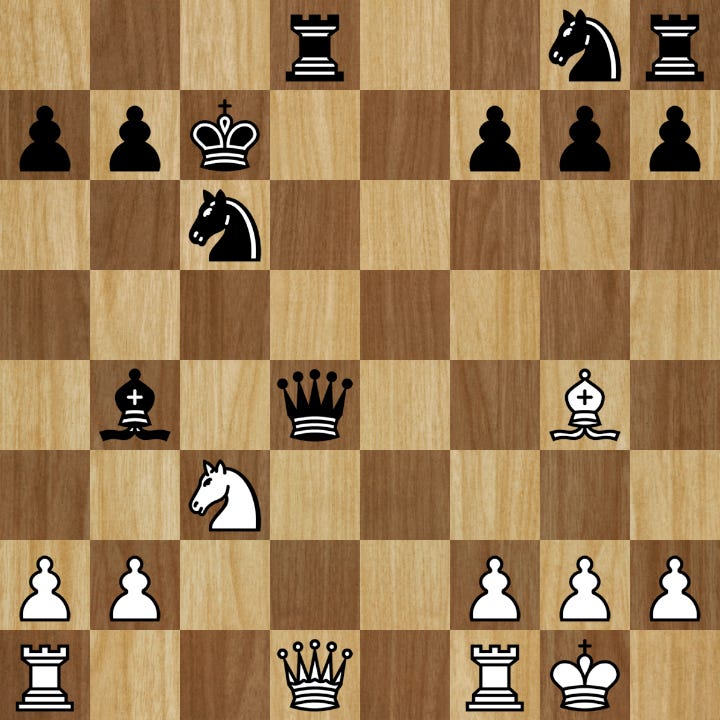
Whose job is it to find the best continuation for your opponent?
Yours and the opponent’s. Yes, you read that well; both of yours :) In order to become a good chess player, in most cases you will have to calculate and find the best moves for your opponent as well.
“Isn’t it their job to find the best move for them? I do my business, they do theirs.”
Nope. If you are not aware of your rival’s possible best responses, then your calculation will be shallow. I remember the good old times, when my coach would send my homework back to me, because even if I found the right move/idea, I didn’t find the best defense for my opponent, and I had to spend even more time on the position…
If you can’t stop this bad habit, work through tactic books where you will be forced to do this!
Puzzles are not like games!
Another huge mistake I see is that certain chess players treat the online puzzles like they were games that they had to play out against the computer. Most sites even reward you for speed, but go against the temptation. Before making a move, try to calculate everything out until you are sure of your solution. Why? Because this is how you can properly practice calculation and visualization. If you can see almost perfectly until 2-3 moves, you are already better than most players, let alone being able to see even further.
This can be tiring, but it’s worth the time and effort. Remember: your goal is to get stronger, not finding the solution quickly, nor increasing your puzzle rating. It’s better to solve 3 puzzles slowly and correctly than 10 carelessly. High puzzle rating is fancy, but unfortunately it means close to nothing.
Don’t draw arrows, you are not Hikaru
Talking about mistakes… you are not the kind of person who is drawing arrows in positions to calculate better, right? Don’t listen to the dark side, you don’t want to develop lazy habits. When you play over the board, there will be no arrows to help you, nor when you are short on time.
‘But Hikaru does it too!’
Yes, but not for himself, for YOU, so you can understand better what he is thinking. Don’t send your visualization skills to retirement this way!
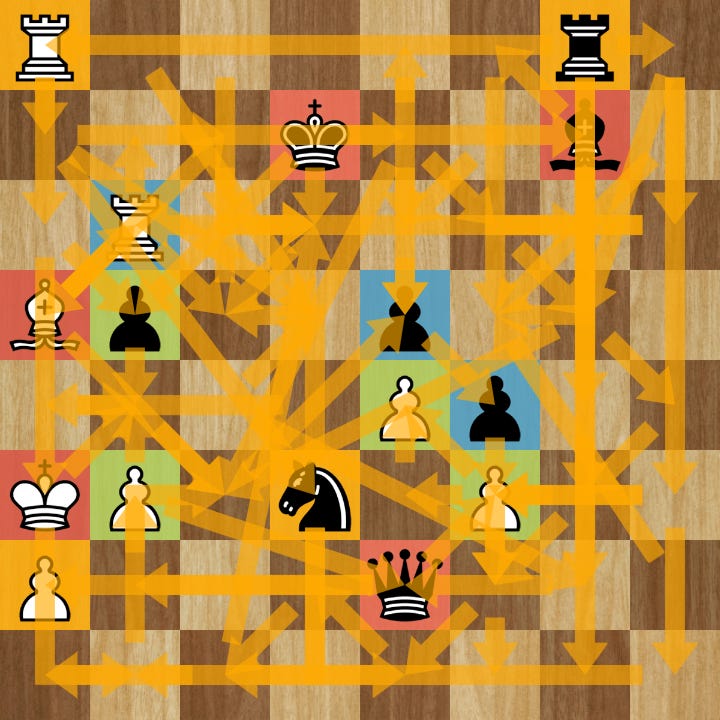
The absolute worst mistake: not doing puzzles at all
“Puzzles are pointless. Why would you solve positions that will never occur in my games?”
The position won’t happen, that’s true. But the patterns will appear, and you will also need to practice how to calculate and visualize, so once you have to do it in your game you will be much quicker and more accurate.
I would even go so far to say that tactics are the muscles in chess, you always have to train with them to be in shape. A couple of puzzles a day will keep the blunders away!
Just kidding. You will always blunder, everyone blunders, we are only human. But it does matter how often; every second move? Once in every game? Twice in every 50 games? There is a difference :)
Where to find good puzzles?
I might sound like a grandma, but nowadays everything is digitalized, and I think there was some beauty in studying from physical books, because they really taught us valuable habits. They taught us patience; you couldn’t just play whatever you wanted when you got annoyed with a position. Very often the tactic was only from White’s perspective, even if you had to find the solution for Black. We had to be able to see the right moves also from the opponent’s perspective (if you are up for a challenge, try to flip the board when you do tactics online, and search for the solution for the other side!).
There are many great resources on the topic, here are some of my favourites:
CT-ART is one of the best collections ever, it’s mostly based on old classics.
As a child I did my fair share of exercises from Maxim Blokh books.
I also liked 1001 Chess Exercises for Beginners.
For advanced players, The Woodpecker Method looked like an interesting way to further level up one’s skills.
I love the wide selection of ChessMood’s Tactic Ninja and Mating Matador courses (they have other great materials too, and if you decide to subscribe to them, you can get 20% off with my LINK)
If you prefer practicing for free, Lichess also has a good database of themed puzzles. If you hover over Puzzles > Puzzle themes and scroll down to Motifs/Advanced/Mates/Mate themes. You can also set the difficulty level to “Easiest (-600)” for pattern training, in which case you don’t need them to be rated.
I also made a video on YouTube about the topic, please feel free to check it out and subscribe! :)
Don't give up on tactical training just because it hasn’t helped you yet. Your pattern recognition and tactical vision won’t develop overnight, so you need to keep practicing patiently and thoughtfully. One day you'll start spotting combinations that used to feel invisible.
Now, before go and get your puzzle training done, let me know in the comments what book, application, website or method helped you the most in this matter!
If you’re looking for more personalized help with your chess, you can find information about my coaching HERE. :)
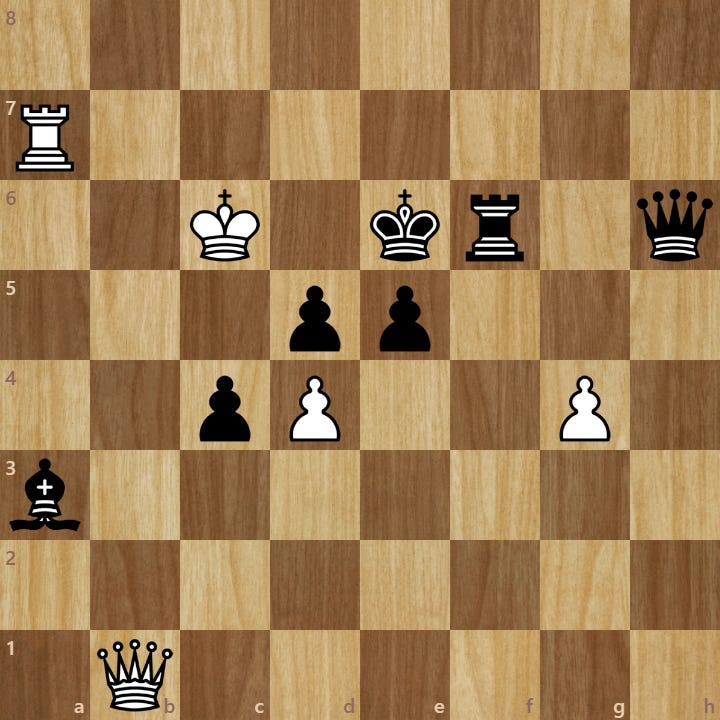
Here is one of my favourite mate-in-two exercises from Susan Polgar's 200 Checkmates book, White to play and mate in 2! Can you find it?
Lichess because you can pick themes or openings and I believe the database they use is coming from positions in games that have been played on lichess, so you never know you might see that puzzle in a game. And free obviously.