

There comes a time in a chess player’s life when they’ve learned many tactical tricks, how to win material when their opponent blunders, and how not to blunder that much themselves. But the sad part is, so did their opponents. The higher someone climbs on the rating ladder, the more their opponents know, too, and the less they blunder. Uff. Damn those opponents!
This is probably where knowing more about positional chess starts to get even more important. It’s no longer enough that you can confidently notice a hanging Queen, because those are not too frequent anymore. You have to learn more about plan-making, how to notice weak pawns and squares, how to be quick enough to exploit them, and a million other small, nuanced tricks. Besides, it also helps if you manage to not make too many unnecessary weaknesses in your own position, giving your opponent a plan idea free of charge. :)
And while all of this might sound a little abstract, these small positional decisions happen in our games all the time. Sometimes, a single pawn move is enough to give the opponent a very clear idea of what to do next.
Some time ago, I had a game that serves as an interesting example of this concept. Despite it being a blitz match, I think it has a couple of important positional lessons you can take with you from it. :) Let me show you!
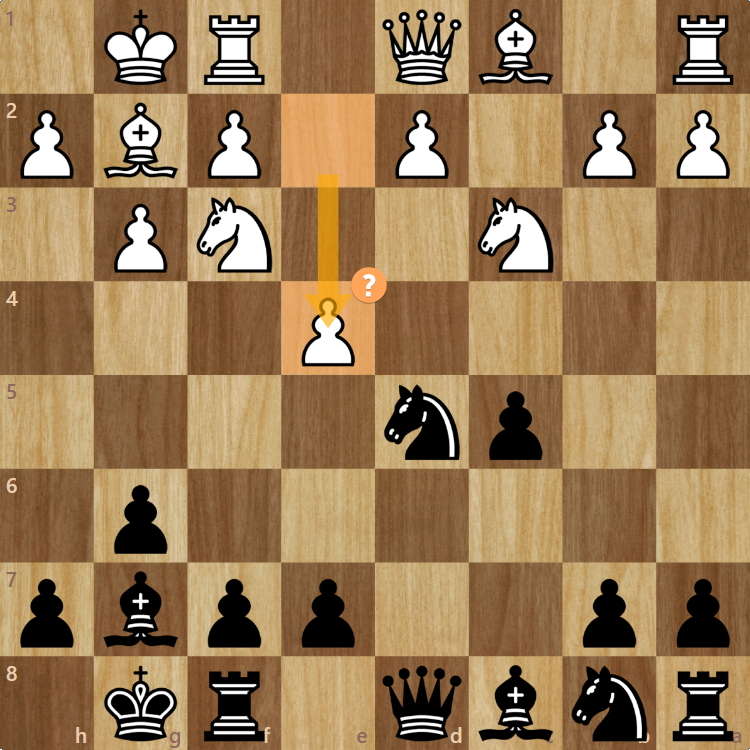
The opening was pretty normal up until this point. My opponent, rated ~2400 in blitz, had just played 8.e2-e4, which I found surprising during the game. The move itself, at first glance, looks alright: it’s forcing and it controls the center. However, there’s something fundamentally wrong with this choice. Before proceeding with the article, stop here for a second and try to find the problem!
Pawns are very stubborn, once you move them, they refuse to go back, so you really want to be sure that you need their help. If you push them carelessly, you might later regret the weaknesses they create, if you even notice the source of the trouble. Because that’s the tricky part. The origins of the issues are not always apparent.
But what counts as a weakness anyway? Very often, these are squares or pawns that another pawn can no longer protect. These little people are essential when it comes to controlling the board. On the other hand, pieces are usually less efficient in the defense, because they don’t want to dedicate their lives to babysitting weaknesses, rather, they want to build a career, and attack. :)
Here, with 8.e4, White created a few weaknesses: d2, d3 and d4. The d2 is a typical example of a backward pawn and, in my experience, one of the hardest weaknesses for most people to notice. The poor fellow is in a one-sided relationship with the e-pawn, it can happily support e4 whenever it’s needed, while the other couldn’t care less. After all, the d-pawn will have a hard time ever making it to d5. It isn’t a priority at the moment, but a potential target for later.
The d3 and d4 squares are a bit more vulnerable, as it is very easy to occupy them: the c5 pawn and the g7 Bishop are already looking at them, and the d8 Queen and the d5 Knight will soon examine them closely too. In contrast, my opponent can never permanently protect them, and ideally, they’d also prefer to spend their time doing something more productive in my territory. (Note that the f3 square falls under the same description as d3 and d4, but there's an important difference: it enjoys the protection of multiple White pieces and it’s out of my reach currently.)
To an inexperienced eye, these might not seem like a lot to work with. What can we do with them anyway? Well, I hear complaints about not finding plans all the time. Just look at the pawns and the squares your opponent left behind! Let’s see how. :)
So how could White have saved this? It’s very hard to say. After 8.e4, the position wasn’t fully lost, it was only better for Black. The problem is that once the pawn was pushed, it immediately gave me something to work with, something to attack, an idea. I didn’t have to invent anything, basically, my opponent created a plan for me.
What did White get in exchange? Difficulty to finish the development and constant need to defend. Practically speaking, it was extremely hard to get out of it, while for Black the moves weren't challenging to find at all. We could say that one negligent pawn move set the course of the game.
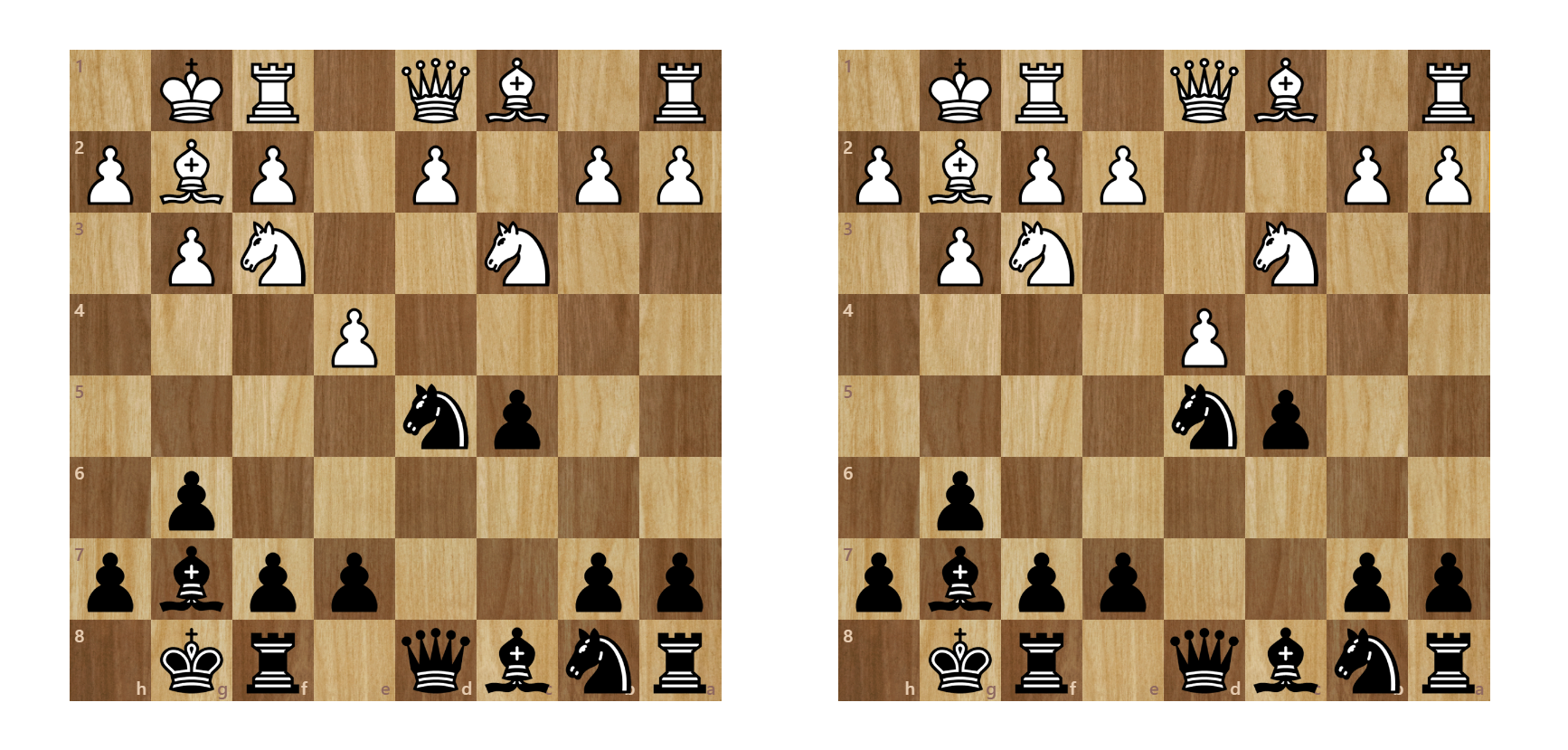
I think the most important lesson is to pay attention whenever your opponent moves a pawn (and before you push one!). The squares it used to control can be just as significant (or even more), as the ones it newly attacked. Ask yourself: which pawns or squares became harder to defend by another pawn? Can you actually make use of those weaknesses?
Of course, not every pawn move creates a disaster. Sometimes you have a very good reason to make the move, and sometimes a weakness is simply not exploitable. But the more you get used to looking for these things, the more you’ll start noticing the small positional opportunities that become increasingly important as you improve.
No, these small gifts are not a hung Rook, nor are they a King-attack accompanied by fireworks like they used to be. But they are presents given by your opponent regardless. A weak square here, an isolated pawn there, and a badly placed piece somewhere else. Once you learn how to turn them into a plan, I hope you’ll appreciate them just as much. :)
And if you’d like more personalized help with your chess, you can find more information about my coaching HERE. :)