

You blundered again. You ended up in a tilting losing session and it’s just getting worse. Now you contemplate quitting chess, because it clearly can’t be for you.
You lost 728 rating points. FIDE considers taking your title, even if you don’t have one, because you played so badly.
Now you are upset, because you know you could have done better.
I totally get you. I’ve been playing chess for more than 20 years, so I’ve been through all of the above. During my career, I’ve noticed that sometimes we get so busy licking our wounds that we make things worse than they have to be.
Frustration is part of the game. Unfortunately or not, we cannot get rid of it. But I think learning how to deal with this feeling is one of the most underrated and most important skills in chess (and life).
Accept the mistakes
Easier said than done, thank you Fruzsi. You’re right, I agree. I’m not perfect at this. I questioned myself through tears about why I keep playing in tournaments after they had gone horribly. Not even that long ago.
But does being this harsh with ourselves help? I don’t think so. That’s why in this article we’ll talk about how to take poor performance seriously without taking it personally. However, for that we’ll need to make peace with our mistakes, so that we can look at them honestly without destroying ourselves. So, let me tell you what helps me make it easier.
Knowing that no one is immune to mistakes
You will always have bad times with chess. It doesn’t matter if you are 500, 1400, 2100 or 2700 rated, this rule applies. We suffer at every level, just maybe a bit differently.
But you know what? If someone who dedicated their entire life to chess, someone who likely studies chess 10–12 hours a day, can play so poorly that they resign after 15 moves, mess up +5 positions, and miss obvious tactics, then so can we!
You will always have bad tournaments, even when the stars are supposed to align for you. But not only you. Have you heard of Magnus Carlsen? Yes? :) Well, for instance, he finished 9th out of 10 with only 4/9 at Norway Chess in 2017. He had already been the World Champion for years by that time, yet he didn’t perform well against players he normally beats.
Everyone will lose rating points periodically, maybe even plateau for a while. Good news: there is light at the end of the tunnel. One of my favourite examples is Radjabov’s story.
In 2012, he peaked at 2793 and he was world number 4 at the time. Pretty good, right? Then things went badly wrong, because by 2016, his rating had fallen to 2696, which is almost 100 points lower than before! Fun fact: as a GM, it’s even harder to win or lose huge amounts of rating points than at lower levels, so it’s a pretty big deal. (Luckily, he managed to climb back. :))
I already hear some of you think: “alright, but 2696 is already high enough, I’d kill for that”. Let’s say you get there now. You might be ecstatic for a while, but eventually the magic will fade, and you’ll get back to the same annoyance of not being able to reach a higher number. I imagine professionals feel upset about the setbacks just like we do.
“But they can afford these slips, they’re already good”.
I’ll sound very cheesy, but these strong players likely made more mistakes than you and me combined throughout their whole career, even when they weren’t successful yet. Still, they became great despite continuing to have failures. Why not us, then?
“Setbacks and losses are both inevitable and essential if you're going to improve and become a good, even great, competitor.“ - Garry Kasparov
Remembering my own comebacks
Before I fall into a deep hole of self-pity after a horrible chess experience, I like to remind myself that something similar has happened before, and that I managed to stand up again.
One of my worst tournaments happened 3 years ago, in 2023. I went there with the hope to gain some FIDE rating, so I could have the chance to participate in the 2024 Budapest Olympiad. Guess what? I ended up losing 60 rating points against opponents rated 200–400 Elo lower than me, making it 100% certain that the dream was crushed. Needless to say that was a huge punch in the stomach.
I got annoyed with myself, and after I went home I did my best to find out what I was missing, and where I needed to improve. Sadly, there was too little time to make it to the Olympiad, but I finally got back above 2100, while consistently scoring half or whole points against 2200-2300+ rated players in multiple events. I count that as a win. :)
I’d like to think that if I hadn’t gotten that big slap, I likely wouldn’t have realized how much more I needed to take my own chess seriously. If it was a neutral or slightly positive/negative result, I’d have kept swimming in lukewarm waters.
Regardless of your level, you likely have your own success stories as well. That tournament where you recovered after a terrible start? Or that game where you were completely lost, yet you won? The time when you plateaued for a while, then you had a big jump? The game where you (almost) took down a stronger opponent? These are all proof that you’ve done it before.
“My own philosophy is simple: every time I lose, I remind myself, ‘This is not the first, nor the last time.’ Somehow, this works like magic.” - GM Vasif Durarbayli
Talking to myself
It’s so easy to turn our bad performance into a verdict: “I played horribly, I’m so untalented” or “Dudevic Randomski started only last year, but they’re already better than me”. There’s really no point in saying these things other than to hurt yourself. But I know it’s easy to get into this spiral. At times, I also have similar ugly thoughts, but I try not to let them take over me.
Instead, when disaster strikes, I imagine that a friend or a student is going through what I’m going through, and I try to offer them comfort. I use the same words with myself, and if my tantruming side attempts to disagree, I play devil’s advocate and argue against her. :)
“Okay, I know you’re upset about this blunder. It really stings. But the game is not over yet, there is still hope. Imagine how proud you will be if you save this position. Let’s see how we can make the most out of it.”
The first few times I used this method, it wasn’t easy. It took some time, and it was more of a “fake it ’til you make it” process. You might feel the same way, but I believe if you keep practicing a kinder inner voice, eventually, it should become easier.
If you’d like to take some of these ideas further in your own games, I also offer one-on-one chess coaching. You can find more information HERE. :)
But there’s an important distinction: being kind to yourself doesn’t mean pretending you played well...
Acceptance doesn’t mean ignorance
Now that you hopefully feel better about your own flaws, there are a few more things I need to tell you. Feeling upset about our poor performance can actually be good. It can help us move forward. So why did I spend so many words on seemingly trying to convince you otherwise?
Because, on the other hand, beating yourself up could backfire. If you can’t manage your emotions, you might resign too early, or you might not be able to turn a bad start into a good or okay tournament. If you learn to accept your mistakes, you’ll have an easier job recovering from them and actually fixing them.
I find it crucial to be forgiving with ourselves in chess. It can make us more resilient, and in the long run, resilience will make us better players. Maybe the game isn’t as lost or bad as you thought, and after all, your opponent isn’t Stockfish 18 either. :)
“Now that I don't give up so easily after my blunders, I realized I'm not the only one who sucks.” - My student, Damiano
However, like we’d say in Hungarian, “don’t fall over the other side of the horse”. Accepting that you’ll make mistakes doesn’t mean you have to be completely chill about them. I don’t want you to say, “I messed up, but it doesn’t bother me”. Don’t become a chess monk.
I think it’s healthy to be frustrated. However, during a game, you don’t really have time to ruminate on it. The important moment is the one between realizing what happened and deciding how to respond to it. Pay attention there. Take a deep breath. You can acknowledge what happened, but then return your attention to chess. The psychological and technical analysis can wait until the game or tournament is over.
Once it’s over, you can let the steam out. Be angry. Be sad. But try not to let yourself go deeper into the spiral, and try to practice a calmer response (maybe even while you play, if you need it!). When the next game starts, don’t waste your energy on thinking about the past.
But also don’t fall into the ‘It was just a dumb blunder’ trap. I hear this so often, but we learn nothing from it. Instead, I want you to ask yourself a few questions about your performance, so you can understand what went wrong (and well!) and what you possibly need to change.
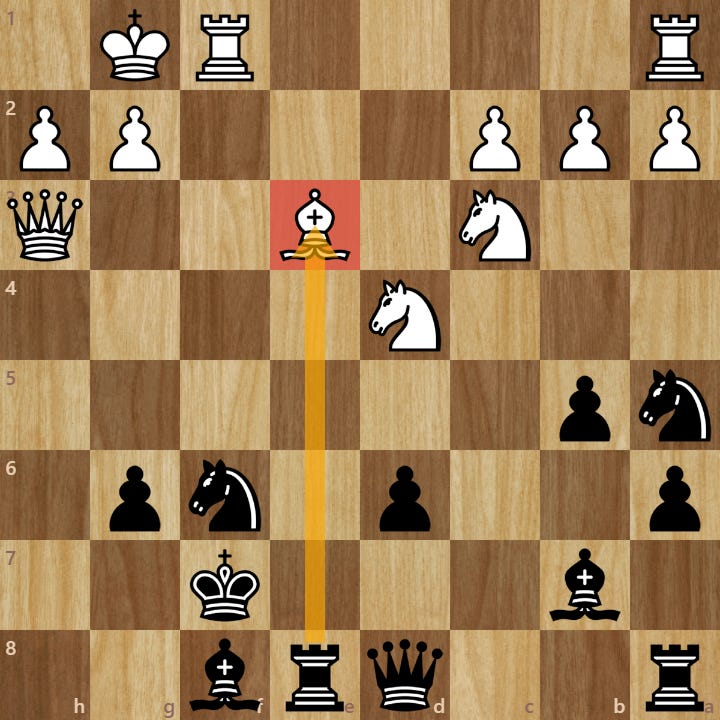
“What did I do wrong?” Blundered? Underestimated the opponent? Didn’t understand the position?
“Why did I do it?” Not focused enough? Bad time management? Being too emotional?
“How can I avoid making it again?” Improving calculation? Learning theoretical endgames? Sleeping more before rounds?
“Is there a recurring pattern in my mistakes?” If you notice a pattern, that should be your biggest priority.
Our personality can also play a huge role in our chess, both in good and bad ways. For example, I tend to be indecisive in my life outside of chess, too. I know where it comes from and I’ve already worked a lot on it, which also helped me in my chess. Sometimes, the things we need to work on as chess players aren’t really chess problems at all. :)
When you look inside yourself, be serious about your answers.
Personally, this analysis excites me sometimes. I picture how much better I’ll be once I fix those problems, how much better my games will be, and how much stronger the opponents I’ll be able to face will be!
“Imagine playing at exactly the same level you do now, but without making any mistakes. You wouldn’t know what you needed to improve, and you’d be stuck at that level forever. So how could you become better then?” - My former coach, FM Erno Dede
So the next time you blunder a mate, lose 33 rating points, or end up last in a tournament, try to remember this.
You are not the first person to play badly, and you definitely won’t be the last. We all struggle with this game, no matter our level. It hurts, and it will often hurt. Feeling disappointed is fine, but don’t dwell on it. Once the dust settles, look at what happened with a little curiosity instead of contempt.
Maybe you find something to fix. Maybe you notice a pattern. And maybe, by learning from your mistakes, you’ll come back stronger.
After all, a bad game is only a bad game. A bad tournament is only a bad tournament. They don’t get to decide what kind of chess player you are. Keep going! :)
Great article!
It’s a topic that usually is dismissed with a simple “it happens”, without understanding why/how/when it happens.
Instead you brought a refreshing dose of realism and clarity on how to deal with mistakes that - at different levels - are part of everyone’s game.
(Also, great quotes! 🤣)
I just wrote about that Petrosian Queen hang. I was playing Guess the Move and whoops. Bad game to choose.